
Water, Warriors, and Copper Mining
After a quick and trouble-free border crossing, it was another New Country Day and time to breathe a massive sigh of relief. Crossing the border from Serbia to Bulgaria was a return to the safety zone of the EU Pet Passport scheme. To us, the guys’ paperwork is a constant worry.
Before entering Bosnia and Herzegovina two and a half months ago, we checked multiple times that all was in order with the guys’ documents. We particularly fretted over Twig’s Titre Test, issued 13 years ago, despite vets verifying her paperwork several times. Everything should be present and correct. But had we missed something? There was always a niggling doubt, giving us butterflies in our stomachs.
We needn’t have worried. Bulgaria didn’t want to see the Pet Passports. The Serbian Border Officer checked, but I think it was more because, as a dog lover, he wanted to talk about our four-legged friends. After checking inside Wolf, he proudly showed a video of his dog, truffle hunting.

Twig

Rolo
Before entering Bulgaria, our research flagged a few places to visit. The first was Rila National Park stretching 81,046 hectares in southwest Bulgaria, about 100 km from the capital city, Sofia. It takes just under two hours by car and is accessible by bus.
More than 100 mountains are 2,000 metres or above. The highest Bulgarian and Balkan peak is Musala, soaring to 2,925 metres. This popular ski resort attracts summer hikers eager to see the numerous glacial lakes. The Seven Rila Lakes is the most visited group of lakes. We decided against walking to this natural attraction, as the three to five hours round trip was too far for our ageing pooches.
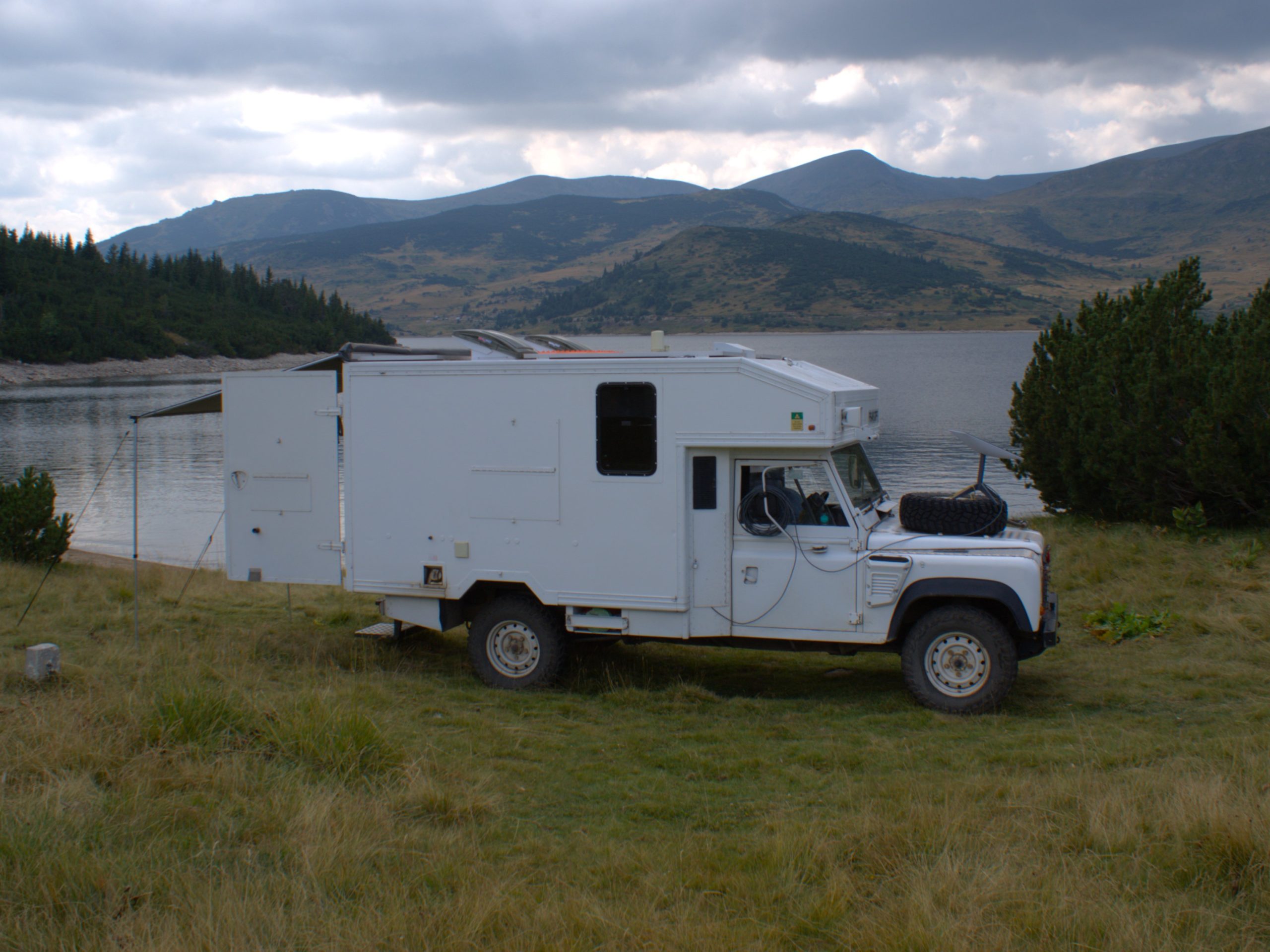
We moved on to Belmeken Dam, located on the eastern edge of the Rila Mountains. The reservoir is 1,923 metres above sea level and the highest reservoir in the Balkan Peninsula. It’s a beautiful location with sandy beaches, perfect for a daily dip, albeit a chilly one at that altitude.

Belmeken Lake


Twiggy was in her element, with a massive lake in her latest garden. Having found a regular supply of fish, some freshly baked in the sun, she took delight in parading her catch.
Over the weekend, there was a steady flow of walkers, cyclists, and campers, but it was so quiet you could almost hear a pin drop.

Twig very proud with her fish supply

Belmeken Reservoir at sunset
Our next stop was Tsar Asen, a copper mining area. Bulgaria is rich in minerals. The large, lifeless, water-filled pits were evidence of this industry. A few dead trees stood in the toxic reddish-brown water, giving the impression of an apocalyptic landscape. Although on the shores, a blackberry bush appeared to flourish.

Copper Mines in Bulgaria


Next, we headed to the Skumsale Thracian Megalith Site and discovered more of Bulgaria’s long and fascinating history. The Thracians were large tribes of formidable warriors, often called barbarians.
They are a mysterious group thought to have ruled Bulgaria from around 3,000 BC. Their origin is unknown, although evidence suggests they were Indo-European. Bulgaria used to form part of a region known as Thrace, along with Greece and Türkiye.
Skumsale is around 7 km from the small town of Strelcha in the Pazardzhik province, central Bulgaria. The Thracian Megalith Site is a large meadow area with picnic tables surrounded by cliffs and various rock formations, some carved by nature and others by the Thracians for sacred rituals. To many visitors, the area remains magical and mysterious with an air of positivity.
We wondered if the Thracians were an inspiration for the Dothrakis in Game of Thrones.

Skumsale Thracian Megalith Site


It was also the first time I heard a jackal howl. At first, I thought it was a dog, but it didn’t sound quite right. After listening to various animal sounds online, we narrowed it down to a jackal.
The following day, while walking, Paul searched for a better viewpoint while I remained on the trail. After taking photos, I turned and faced an animal on the path a couple hundred metres ahead. After the previous night’s research, I realised it was a jackal.
The frustrating thing is that even though I had a camera hung around my neck, I took no photos. The jackal stood its ground, while its stare held me in a trance until I looked away for a second when it went in a flash.
It turns out Bulgaria has the largest population of jackals in Europe, and it was likely a Golden Jackal, otherwise known as an Eurasian.
Bulgaria is proving to be a country of discovery. We can’t wait to see what next brings.


0 Comments